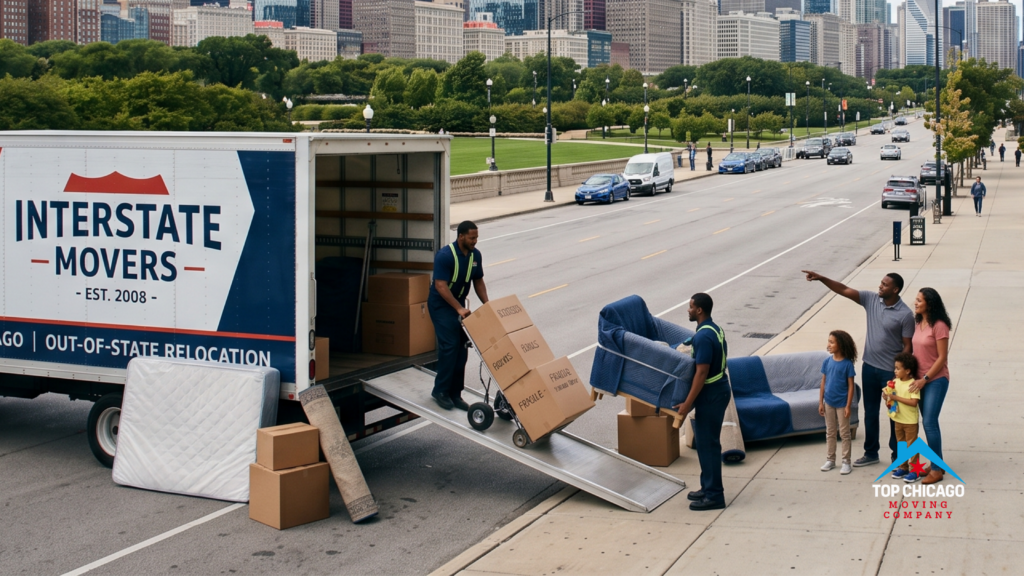
So you’ve got a job offer in another state, or maybe you’re just ready for a change of scenery outside of Illinois. Moving out of state is a completely different animal compared to moving across town, and it’s important to understand exactly what interstate movers do before you start making calls.
At Top Chicago Moving, we focus exclusively on local moves throughout the Chicagoland area, so we won’t be the ones driving your belongings to Denver or Atlanta. But we talk to plenty of customers who are in the middle of planning interstate relocations, and we know how confusing the process can be. This guide breaks down what interstate movers actually handle so you know what to expect.
What Actually Makes a Move “Interstate”?
An interstate move simply means your belongings are crossing a state line, whether you’re going from Chicago to Milwaukee or all the way to California. This distinction matters because interstate moves are regulated differently than local moves.
Interstate movers must be licensed through the Federal Motor Carrier Safety Administration (FMCSA), a federal agency that oversees household goods carriers operating across state lines. This is different from local movers like us, who typically only need state-level licensing since we stay within Illinois.
This regulatory difference exists because interstate commerce falls under federal jurisdiction, while local moves are regulated at the state level. Knowing this distinction helps explain why the paperwork, pricing, and processes look so different between local and long-distance moves.
Services Interstate Movers Typically Provide
Full-service interstate moving companies generally offer a comprehensive package of services designed to handle every aspect of a long-distance relocation.
Packing services are commonly included, with movers carefully wrapping and boxing your belongings using materials designed to withstand longer transit times. This differs somewhat from local packing, since items need more protection when they’re traveling hundreds or thousands of miles.
Loading and transportation form the core of what interstate movers do, using specialized trucks designed for long-haul travel. These trucks often carry multiple households’ belongings at once, which is why delivery windows for interstate moves tend to be less precise than local moves.
Storage-in-transit is frequently available for customers who need their belongings held temporarily between pickup and delivery. This service comes in handy when your new home isn’t ready yet, or when there’s a gap between move-out and move-in dates.
Valuation coverage, which is essentially the moving industry’s version of insurance, is required by federal law for interstate movers. Companies must offer at least basic coverage, though many customers choose to purchase additional protection for valuable items.
Unloading and placement at your new home rounds out the typical service package, with movers bringing boxes and furniture into your new space and sometimes offering basic furniture assembly.
What Interstate Movers Typically Don’t Handle
Despite offering comprehensive services, there are certain things interstate movers generally won’t take on, and knowing these limitations ahead of time can save you headaches.
Hazardous materials like propane tanks, paint, cleaning chemicals, and aerosols are prohibited from interstate shipments due to safety regulations. You’ll need to plan alternative arrangements for these items, whether that means using them up, giving them away, or disposing of them properly before your move.
Perishable food items typically aren’t transported by interstate movers since there’s no way to guarantee proper storage conditions during a multi-day journey. Plan to eat down your pantry and freezer before your move date.
Extremely valuable items like jewelry, important documents, and family heirlooms are usually recommended for personal transport rather than inclusion in the moving truck. Most movers will actually decline responsibility for these items if something goes wrong.
Plants often can’t cross state lines due to agricultural regulations in certain states, so check requirements before assuming your beloved houseplants can make the journey with the rest of your belongings.
Some interstate movers also have weight or size restrictions on individual items, so extremely heavy pieces like safes or certain specialty equipment might require separate arrangements.
How to Choose a Legitimate Interstate Mover
Since interstate moving involves federal regulations, there are specific steps you should take to verify you’re working with a legitimate, licensed company.
Check the company’s USDOT number through the FMCSA’s Protect Your Move website, which allows you to verify licensing, insurance, and complaint history before signing any contracts.
Request an in-home or virtual survey rather than accepting an estimate based on a phone conversation alone. Reputable interstate movers need to see your belongings to provide accurate pricing, and companies that skip this step are often setting up for bait-and-switch pricing tactics later.
Get everything in writing, including your estimate, pickup and delivery windows, and valuation coverage details. Verbal promises don’t hold up if something goes wrong during your move.
Read reviews from verified sources and ask friends or colleagues for recommendations if they’ve made similar moves. Interstate relocations involve enough moving parts without adding an unreliable company to the mix.
Where Local Movers Fit Into Your Interstate Move
Even though we don’t handle the actual interstate transport, there’s a lot of prep work involved in any long-distance move that a local Chicago moving company can help with.
Downsizing before a big move is one of the smartest ways to save money, since interstate movers typically charge based on weight. Our packing services can help you sort through your belongings efficiently, deciding what’s worth shipping across the country and what’s better sold, donated, or tossed before your interstate mover ever shows up.
If you’re downsizing from a house to an apartment, or need to move belongings to a storage facility before your interstate move date, our residential moving services can handle that local leg of the journey. This is especially helpful if there’s a gap between your Chicago move-out date and when the interstate movers are scheduled to arrive.
We also work with plenty of customers moving into Chicago from out of state, helping with that final local push once the long-distance movers drop everything at a storage facility or if you need help getting settled into your new place.
Moving out of state involves a lot of moving parts, and understanding what interstate movers actually handle helps you plan more effectively. While the long-distance leg isn’t something we handle here at Top Chicago Moving, we’re happy to help with the local side of things, whether that’s packing up your current place or handling a local move as part of your bigger relocation plan.